Gaining a Global Perspective in Germany

George Hotelling approached his study abroad experience eager to learn how sustainability fits into a global agricultural context.
Hotelling recently spent two weeks studying Sustainable Livestock Production in Germany (BAE 495/502). During this course, he learned about sustainable livestock production processes through pre-departure lectures and immersive learning experiences in Germany. Led by NC State faculty from the Biological and Agricultural Engineering Department and the Prestage Poultry Science Department, the course aims to prepare students from different backgrounds for workplace cross-disciplinary collaboration and innovation.
Hotelling is a masters student in the Department of Biological and Agricultural Engineering studying how air quality compares when applying swine lagoon liquids by spray irrigation or subsurface drip irrigation.
We sat down with Hotelling to hear how this experience deepened his understanding of what it means to farm sustainably.
Why did you choose this study abroad program?
I chose this program because I haven’t done a study abroad, and this was an exciting opportunity to experience new perspectives and explore a new culture. I was excited to learn more about sustainability in an agricultural context.
How did European systems compare to American systems?
In Germany, they also operate by confined animal production, which has its inherent challenges, like manure management and animal health and welfare. The way they address these challenges are slightly different than how we do. There were some novel approaches being explored like the HAVITO pig-housing concept, but there were also a lot of similarities, such as manure scrapers in the dairy barn and livestock vaccination.
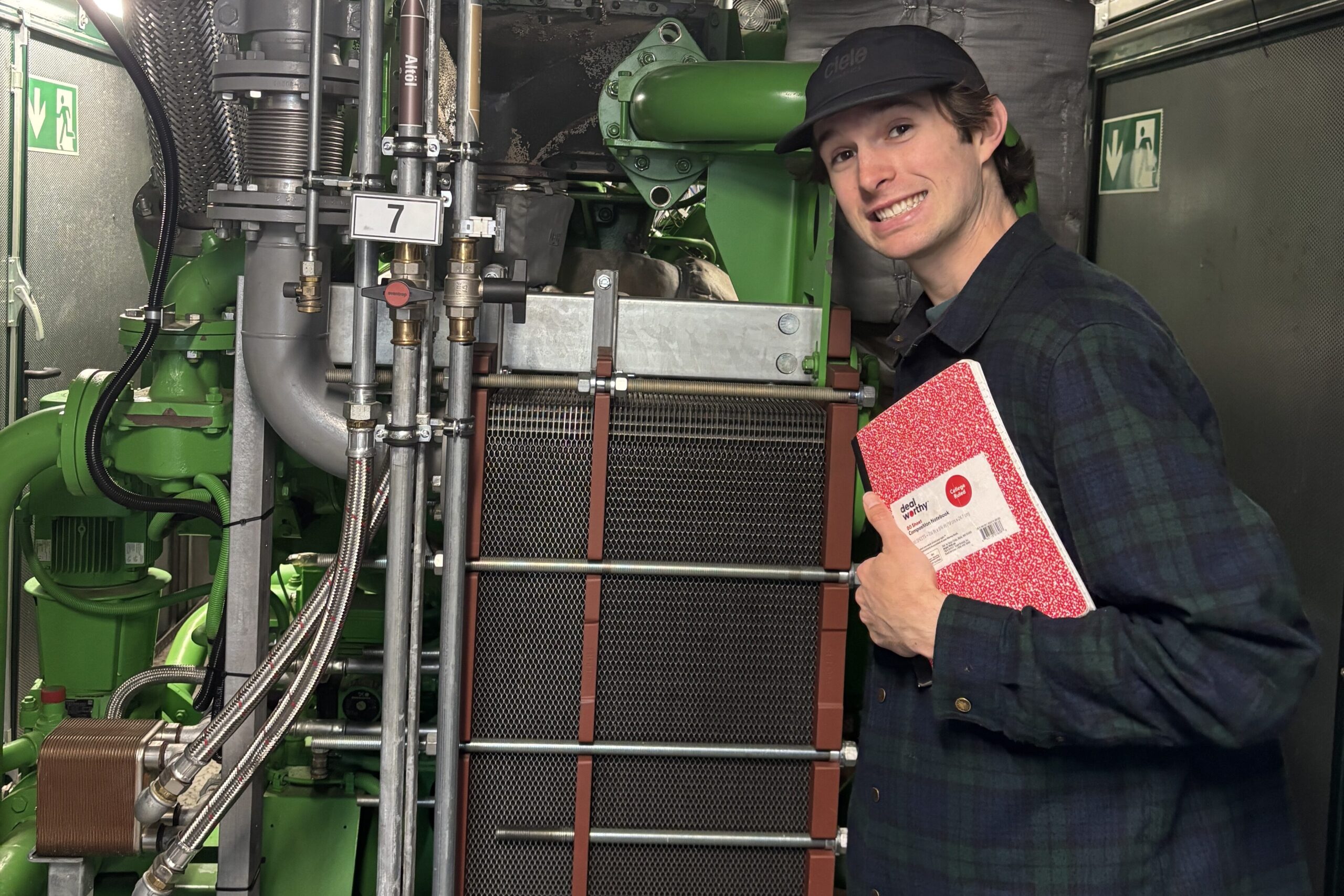
Which specific farm, company, or research center visit was your absolute favorite?
Trebbin Agricultural Cooperative Dairy Farm was really interesting because of its history. It was outside of Berlin, and it existed originally in the Soviet-occupied area with communist principles. During that time, they took a lot of the small farms and pushed them together. When reunification happened, the previously united farms had to figure out what to do. Some of them tried to split apart, and some of them tried to remain together. At Trebbin, they successfully became a co-op, and they now support a community built around the co-op and advocate for sustainable agriculture practices.
How did you connect with the local culture?
Definitely through eating the food and exploring Berlin. We had sausages, sauerkraut and schnitzel. I actually know what those things are now!

Your favorite thing you learned?
I enjoyed learning how the German government responded to their citizens’ primary perspectives and concerns. Animal welfare is a very popular topic in Germany. After speaking with German students and German politicians, I found that vegetarianism or veganism are held highly. It was interesting to learn how this preference influenced the agriculture space.
How has this program impacted your outlook on your discipline?
My research is in swine manure management, how the system operates, and what changes we can implement to make it a little bit better. This experience really helped me grasp the interplay between stakeholders under economic, environmental and social pillars of sustainability. I’m excited to bring that mindset back to North Carolina, and apply this framework to approach North Carolina agriculture!
- Categories: